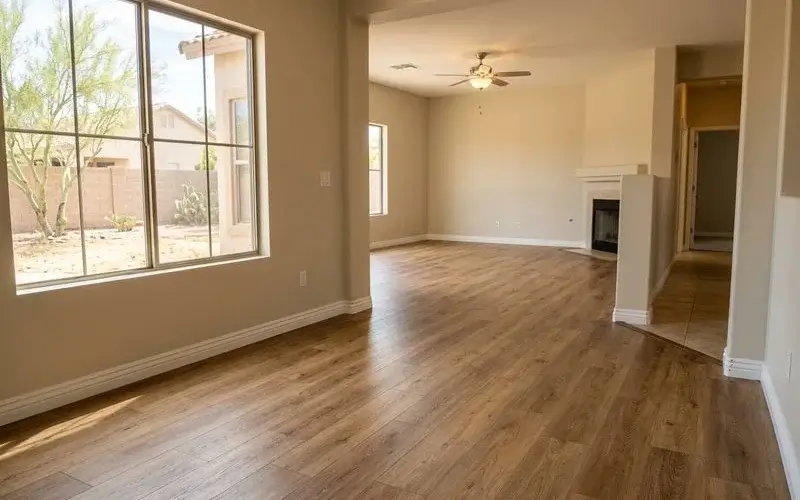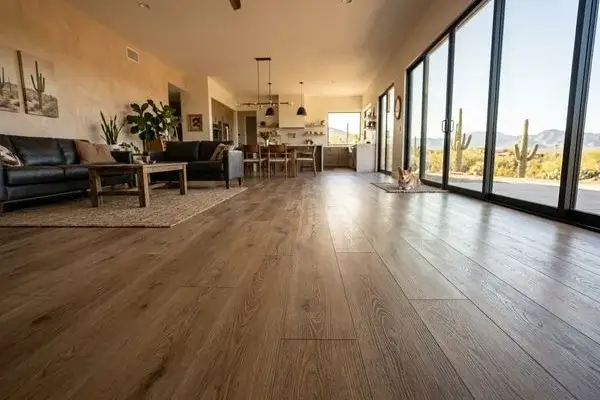

Luxury vinyl plank (LVP) has become the most popular flooring material in the United States — and in Arizona, it is not even close. No other flooring type combines waterproofing, heat stability, realistic wood-look aesthetics, and easy maintenance as effectively as LVP. If you are considering new floors for your home, this guide covers everything you need to make a confident decision.
What Is Luxury Vinyl Plank Flooring?
Luxury vinyl plank is a multi-layer synthetic flooring product engineered to look and feel like hardwood. Each plank typically consists of four layers:
- Wear layer — A clear protective coating that resists scratching, scuffing, and staining. Thickness is measured in mils (thousandths of an inch). Residential products typically range from 6 mil to 20 mil; thicker wear layers last longer and resist pet scratches better.
- Photographic layer — A high-resolution image printed beneath the wear layer that replicates the texture and color variation of real wood grain, stone, or other materials. Modern printing technology has made these remarkably realistic.
- Rigid core — The structural heart of LVP. This is what separates modern LVP from old sheet vinyl. The core is made from either stone plastic composite (SPC) or wood plastic composite (WPC) and gives the plank its rigidity, dimensional stability, and impact resistance.
- Underlayment/backing — A foam or cork layer bonded to the bottom of the plank that absorbs sound, provides slight cushion, and helps the floor float over minor subfloor imperfections.
Why LVP Dominates Arizona Homes
Arizona’s climate presents challenges that eliminate or limit most traditional flooring options.
Heat and temperature swings. Phoenix regularly exceeds 115°F in summer. Even with air conditioning, homes experience significant temperature differentials between rooms, between floors, and between morning and afternoon. Wood-based products — solid hardwood, engineered hardwood, and laminate — expand and contract as temperatures rise and fall. Over years of Arizona summers, this movement causes gaps, warping, and cupped planks. LVP’s rigid composite core is not affected by heat the same way. It expands minimally and stays flat.
Monsoon humidity. After months of dry desert air, monsoon season brings rapid humidity spikes. This is precisely the condition that causes laminate flooring to swell at the seams. Because LVP’s core is non-porous, it does not absorb atmospheric moisture and does not swell.
Concrete slab foundations. Almost all Arizona homes are built on concrete slab — not a crawl space or basement. Concrete slabs emit moisture vapor upward, which is a problem for hardwood installed below grade or directly on slab. LVP is unaffected by this vapor, making it ideal for slab-on-grade construction.
Types and Styles
Plank width has a significant visual impact. Narrow planks (2”–4”) mimic traditional strip hardwood and look well in smaller rooms or traditional styles. Wide planks (5”–9”) create a modern, open look and are the current standard for most Arizona homes. Extra-wide planks (7”+ or multi-width patterns) are a premium option in larger open-plan spaces.
Wood-look finishes range from light natural oak and pale birch to warm honey, medium walnut, and dark espresso tones. The trend in Arizona leans toward light to medium warm neutrals — tones that complement the region’s natural light and desert palette without making rooms feel dark.
Stone-look finishes replicate concrete, marble, travertine, and slate. These are popular in kitchens and great rooms and pair especially well with modern and transitional interiors.
How to Compare LVP Products
When shopping for LVP, these are the specifications that actually matter:
- Wear layer thickness — 12 mil minimum for households with pets or heavy traffic. 6–8 mil is sufficient for low-traffic areas.
- Total plank thickness — 6mm is the practical minimum for floating installation; 8mm and above feels more substantial underfoot and handles subfloor imperfections better.
- Core type — SPC for high-traffic, high-heat, or high-moisture areas. WPC for bedrooms and living rooms where comfort underfoot matters more.
- Finish texture — Embossed-in-register (EIR) texture follows the actual grain lines printed beneath it, producing the most realistic feel. Avoid high-gloss finishes in high-traffic areas — they show scratches and scuffs more readily.
Installation Methods
Most LVP installs as a floating floor using a click-lock system. Planks snap together along their edges and float over an underlayment without being glued or nailed to the subfloor. This makes installation faster, cleaner, and reversible.
Glue-down LVP is used in some commercial applications and in rooms where the floating method is not suitable due to height constraints. It is less common in residential installs but provides a more solid, stable feel.
Subfloor preparation is critical for any LVP installation. The subfloor must be flat — LVP with a rigid core does not flex to conform to humps and dips. Most manufacturers require no more than 3/16” of variation over 10 feet. Uneven subfloors need to be leveled with self-leveling compound before any product goes down. Our guide on why subfloor preparation matters explains what this process involves and when it’s needed.
Maintenance and Longevity
LVP is one of the easiest floors to maintain:
- Daily care — Sweep or vacuum to remove grit and debris that can scratch the wear layer.
- Cleaning — Damp mop with a vinyl-safe cleaner. Never use steam mops, which force moisture into the seams and can damage the underlayment.
- Protection — Use felt pads under furniture legs and area rugs in high-traffic paths.
- Sunlight — LVP is UV-resistant, but prolonged direct sun exposure can cause fading over time. Window coverings help in south- and west-facing rooms.
A quality LVP product installed correctly in a residential setting typically lasts 20–30 years. For a complete care routine, see our guide on how to maintain luxury vinyl plank floors.
LVP vs. Other Flooring Options
| LVP | Hardwood | Laminate | Tile | |
|---|---|---|---|---|
| Waterproof | Yes | No | Yes | Yes |
| Arizona heat stability | Excellent | Poor–Fair | Good | Excellent |
| Realistic wood look | Very good | Authentic | Very good | Many wood-look options — good |
| Comfort underfoot | Good | Good | Good | Hard/cold |
| Maintenance | Low | Medium | Low | Low |
| Cost (installed) | $ | $$$ | $ | $$ |
For a deeper comparison, see our guide on LVP vs. laminate flooring. For full material breakdowns, explore our guides on hardwood flooring, laminate flooring, and tile flooring.
Zona Floors installs LVP across Tempe, Phoenix, and the entire Maricopa County area. We bring samples to your home so you can see how finishes look in your actual lighting, and we provide transparent, itemized estimates with a beat-any-price guarantee.