Natural stone is the oldest flooring material in human history, and it remains one of the most compelling choices available. Every piece is geologically unique — no two tiles are identical in pattern, color, or texture. No printing process has fully replicated what millions of years of heat and pressure create. For Arizona homeowners, natural stone also has practical advantages: it handles heat well, stays cool underfoot, and some species have been used successfully outdoors in the Southwest for generations.
Natural Stone Species for Arizona
Travertine
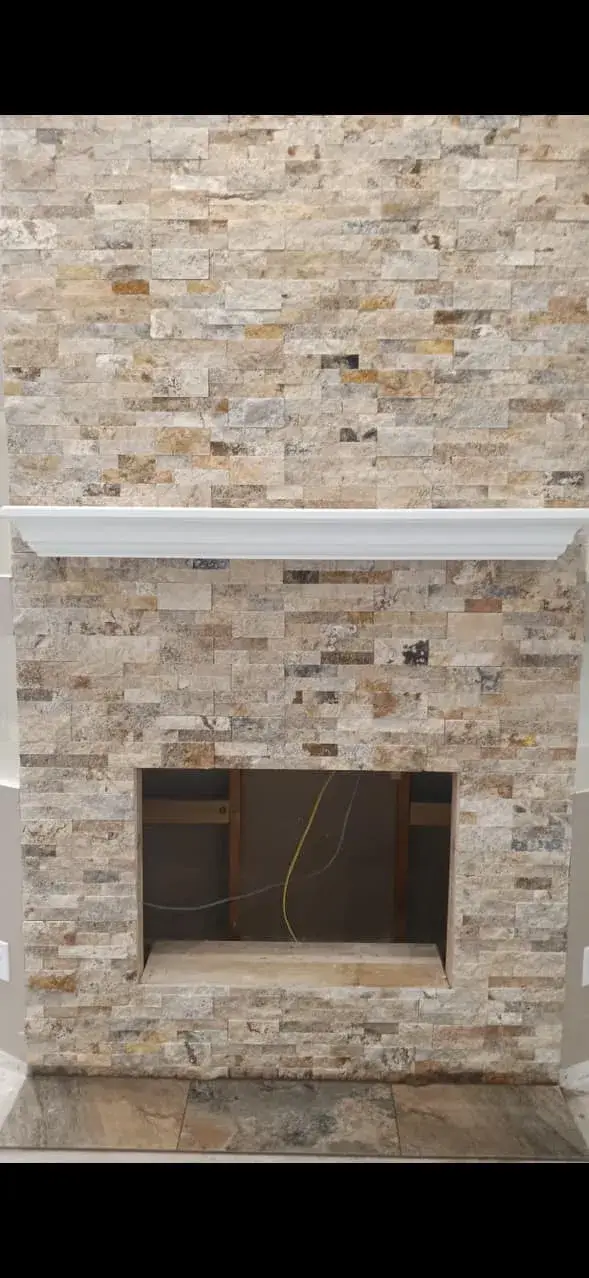
Travertine is sedimentary limestone formed by mineral-rich spring water. It is the dominant natural stone in Arizona residential design — used in entryways, living rooms, kitchens, bathrooms, and outdoor patios across the Phoenix metro. Its warm palette of cream, ivory, walnut, and gold tones fits the regional aesthetic naturally.
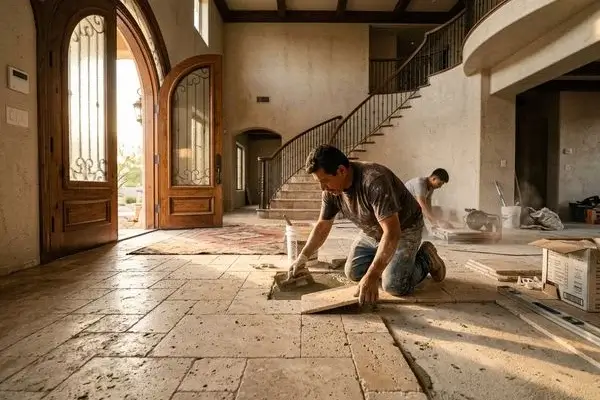
Filled and honed travertine — where the natural voids are filled with grout or resin, and the surface is ground to a smooth matte finish — is the most practical choice for interior floors. It is flat, easy to clean, and comfortable underfoot. Tumbled travertine is processed to soften and round the edges and texture the surface, giving it an aged, rustic character. Its textured surface also provides natural slip resistance, making it popular for outdoor patios, pool surrounds, and walkways.
Travertine requires sealing and periodic re-sealing. Unsealed travertine absorbs oils, cleaning products, and spills and will stain. A penetrating sealer applied after installation protects the stone from within. For outdoor Arizona applications, UV exposure and temperature cycling demand re-sealing every one to two years.
Marble
Marble is metamorphic limestone — limestone subjected to intense heat and pressure over geological time, which recrystallizes the calcite and creates the signature veining patterns marble is known for. Every slab and tile is unique in its veining, color gradients, and mineral inclusions.
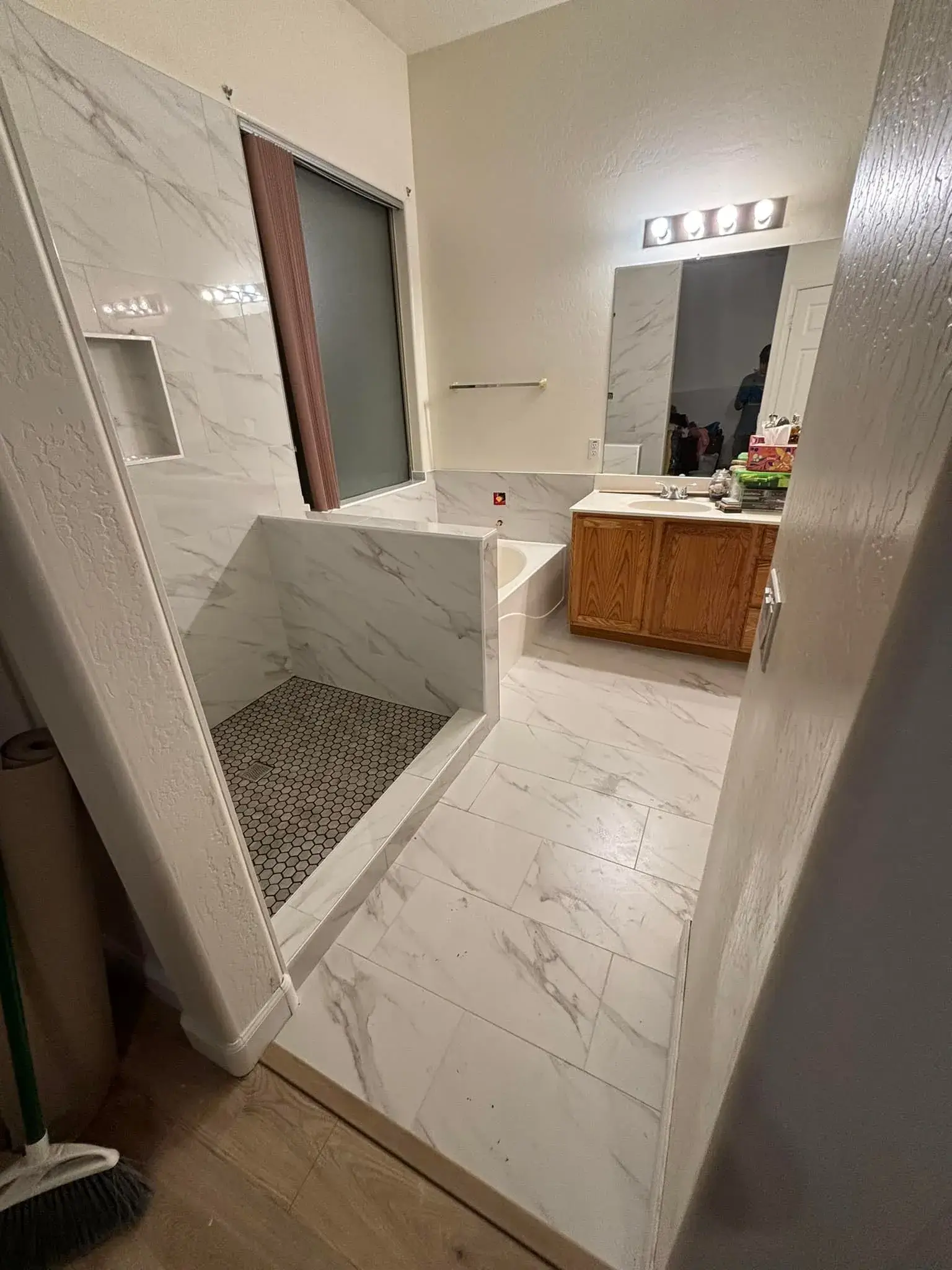
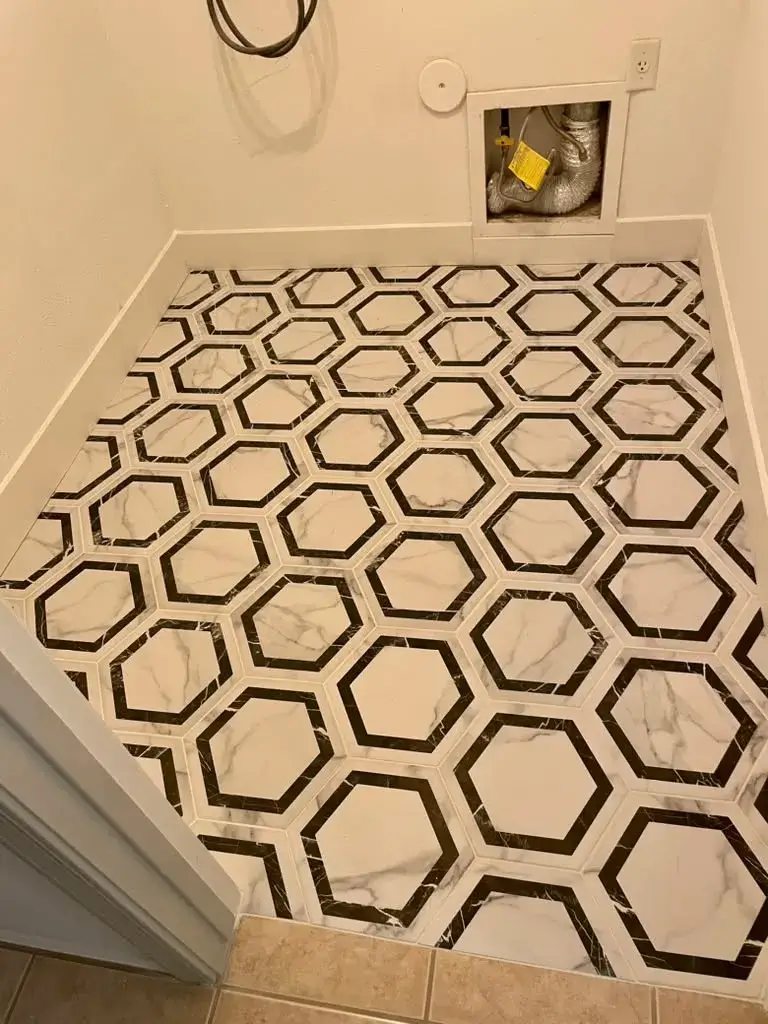
Marble is one of the most visually striking flooring materials available. White Carrara marble with gray veining, Calacatta with dramatic gold veining, and Nero Marquina black marble are all statement materials that elevate any space they are used in.
The trade-offs are maintenance and hardness. Marble is softer than porcelain or granite, making it more susceptible to scratching from grit tracked in on shoes. It is also highly porous and highly reactive — acidic substances (citrus, vinegar, wine, many cleaning products) etch the polished surface, leaving dull spots. Marble requires a penetrating sealer, cautious cleaning with pH-neutral products, and periodic re-polishing in high-traffic areas.
For Arizona homes, marble is best suited for lower-traffic formal areas — entryways, dining rooms, master bathroom floors — where its beauty can be appreciated without the wear of daily high-traffic use. For full bathroom scope including tile, shower builds, and flooring options, see our bathroom flooring services. It is not a practical choice for kitchens, outdoor applications, or homes with young children and pets.
Slate
Slate is a fine-grained metamorphic rock with a layered, cleft surface that gives it a naturally textured, earthy character. It ranges in color from blacks and charcoals to greens, purples, and rusty reds, often with multiple tones within a single tile.
Slate is one of the harder and more durable natural stones — more resistant to scratching than marble and less porous than travertine. Its natural cleft surface provides excellent slip resistance, making it well-suited for entryways, mudrooms, and bathroom floors. It is also commonly used outdoors.
Slate requires sealing to protect against moisture and staining, though it is less thirsty than marble or travertine. It is typically used with minimal grout lines to preserve the irregular, organic look of the stone.
Limestone
Limestone is a sedimentary rock composed primarily of calcite. It has a soft, muted palette — creams, beiges, grays, and warm taupes — and a subtle texture that varies between smooth and slightly grainy. It brings a quiet elegance that marble cannot quite match for understated, refined interiors.
Limestone is softer and more porous than porcelain or granite, placing it closer to travertine and marble in maintenance requirements. It needs sealing, requires pH-neutral cleaning products, and is susceptible to etching from acids. It is best used in lower-traffic interior applications where moisture and heavy use are not concerns.
Granite
While granite is most commonly encountered as a countertop material, it is also used in flooring applications — particularly in formal entryways and commercial settings. Granite is one of the hardest natural stones, with excellent scratch and moisture resistance. It requires sealing but is far less porous than marble or travertine.
Why Natural Stone Works Well in Arizona
Thermal stability. Natural stone does not expand or contract meaningfully with temperature changes. A porcelain or marble floor that was set in thinset on a concrete slab will remain stable whether the room is 65°F or 95°F. This is a significant advantage in Arizona, where flooring materials that move with temperature are a constant problem.
Cool underfoot. Stone’s thermal mass keeps it cooler than the surrounding air temperature in summer. On a 100°F day, a stone floor inside an air-conditioned Arizona home feels noticeably cool underfoot — a genuine comfort benefit.
Slab compatibility. Natural stone can be set directly on a concrete slab with appropriate preparation. Arizona’s near-universal slab-on-grade construction is well-suited for stone.
Outdoor performance. Properly rated and sealed natural stone — travertine, slate, and appropriate limestone — performs well on Arizona patios, pool surrounds, and walkways. It stays cooler underfoot than dark concrete or synthetic pavers in full Arizona sun.
What Good Stone Installation Requires
Natural stone installation demands more material-specific knowledge than manufactured tile. Three things separate a quality installation from one that will fail.
Proper thinset selection. Heavy natural stone — particularly thick travertine pavers and large limestone slabs — requires a full-coverage thinset application. We use the back-butter technique, applying thinset to both the substrate and the back of each stone, to eliminate hollow spots. Hollow spots cause cracking and rocking when the stone is subjected to point loads.
Correct substrate flatness. Large-format natural stone has the same tolerance requirements as large-format porcelain: the substrate must be exceptionally flat. Stone does not flex; it cracks under point loading across an unsupported span. We level every substrate to the tolerance required by the stone size and thickness. Our guide on subfloor leveling and preparation explains what this process involves for different stone sizes and formats.
Sealing. Every natural stone installation we complete is sealed before the space is put back into use. The sealer type is matched to the stone species — different stones have different porosity levels and require different products. We also advise on re-sealing schedules appropriate for each stone’s use environment. Outdoor travertine needs more frequent attention than interior marble; kitchen limestone is exposed to more potential staining than an entryway floor.
Zona Floors installs travertine, slate, marble, limestone, and other natural stone materials throughout Tempe, Phoenix, and Maricopa County. For our full tile and stone installation services — including shower builds, backsplashes, and outdoor applications — visit our tile & stone flooring page. If you’re weighing stone against manufactured options, our tile flooring guide covers porcelain and ceramic — both lower-maintenance alternatives available in stone-look finishes.