Tile is one of the oldest building materials in the world — and one of the most appropriate for the desert Southwest. Arizona’s intense heat, concrete slab construction, and dry-then-wet monsoon cycle are all conditions that tile handles naturally. If you are weighing flooring options for your home, understanding what tile is, how different types perform, and what the installation process involves will help you make a confident decision.
Types of Tile Flooring
Porcelain Tile
Porcelain tile is the premium standard for floor applications in Arizona. It is made from refined, dense clay fired at very high temperatures (over 2,300°F), which vitrifies the material — essentially turning it into a glass-like solid. The result is a tile with a water absorption rate below 0.5%, making it effectively waterproof. Porcelain is also harder and more resistant to chipping than ceramic tile, and it is rated for outdoor use, which makes it suitable for Arizona patios, pool surrounds, and exterior walkways.
Glazed porcelain has a glass-based coating applied before firing. The glaze adds color, pattern, and a surface that is easy to clean. Through-body (full-body) porcelain has color and pattern running through the entire thickness of the tile — if it chips, the chip blends with the body rather than exposing a different-colored core. Full-body porcelain is preferred in high-traffic commercial and outdoor applications.
Ceramic Tile
Ceramic tile is made from similar clay but fired at lower temperatures and is less dense than porcelain. It absorbs more water, is softer, and is generally rated for interior use only. It is easier to cut and shape than porcelain — a practical advantage in intricate pattern work and smaller-format tiles where many cuts are required.
Ceramic is an excellent choice for walls, backsplashes, and low-to-moderate traffic interior floors. For Arizona outdoor applications or wet areas like showers and pool surrounds, porcelain is the appropriate choice. For a full breakdown of when to choose each, see our porcelain vs. ceramic tile guide for Arizona homes.
Tile Ratings to Understand
- PEI Rating (Porcelain Enamel Institute) — Measures surface hardness and wear resistance on a scale of 0–5. PEI 3 is suitable for moderate residential traffic. PEI 4 handles heavy residential use. PEI 5 is for commercial and heavy-duty applications. Use PEI 3 or higher for any floor application.
- COF (Coefficient of Friction) — Measures slip resistance. A COF of 0.60 or higher is the standard recommendation for residential floors. Wet areas (shower floors, pool surrounds) should have a COF above 0.80. Textured, matte, or small-mosaic surfaces typically have higher COF values than large smooth tiles.
- Water Absorption — Less than 0.5% = porcelain (essentially waterproof). 0.5%–3% = vitreous ceramic. 3%–7% = semi-vitreous ceramic. Above 7% = non-vitreous (walls only).
Why Tile Works So Well in Arizona
Arizona’s climate is defined by conditions that challenge most flooring materials. Tile handles all of them.
Heat. Tile does not expand meaningfully with heat. It does not warp, buckle, or gap during Phoenix summers. Its coefficient of thermal expansion is very low — particularly important for exterior applications where tiles see the full range of Arizona temperatures.
Waterproofing. Porcelain tile is impervious to moisture. It does not absorb water, swell, or deteriorate when wet. This makes it ideal for bathrooms, kitchens, laundry rooms, and outdoor spaces — all the areas where other flooring materials struggle.
Cool underfoot. Tile’s thermal mass means it absorbs and holds coolness. In summer, tile floors stay noticeably cooler than the surrounding air temperature, which is a comfort advantage in Arizona’s heat. (In winter, this same property makes tile feel cold — a consideration addressed below.)
Concrete slabs. Arizona’s slab foundations are ideal for tile. Tile is one of the few flooring materials that can be set directly on concrete with no subfloor assembly required, assuming the slab is flat and structurally sound.
Large-Format Tile
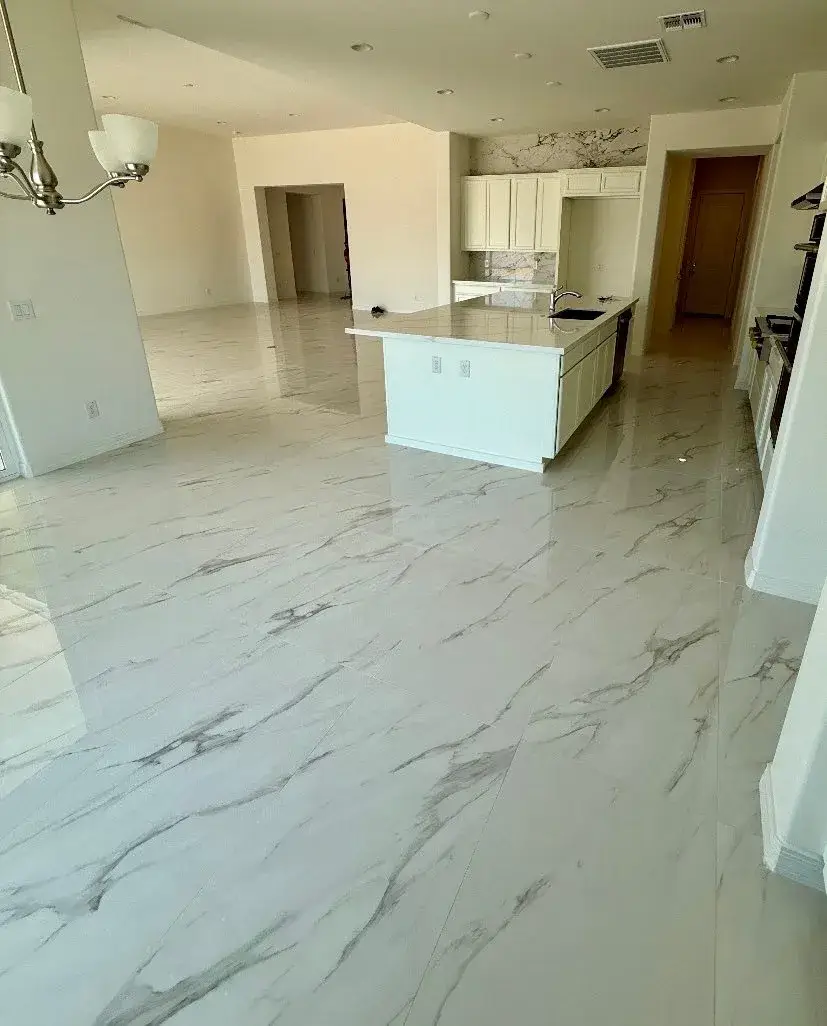
One of the defining trends in Arizona residential design over the past decade has been the shift toward large-format tile. Formats like 24x24, 24x48, and even 48x48 tiles are increasingly standard in new construction and major renovations.
The visual argument is simple: fewer grout lines create a cleaner, more continuous surface that makes rooms feel larger. The grout-line-to-tile ratio that defined 12x12 checkerboard floors disappears with large-format tile, replaced by an almost seamless expanse of material.
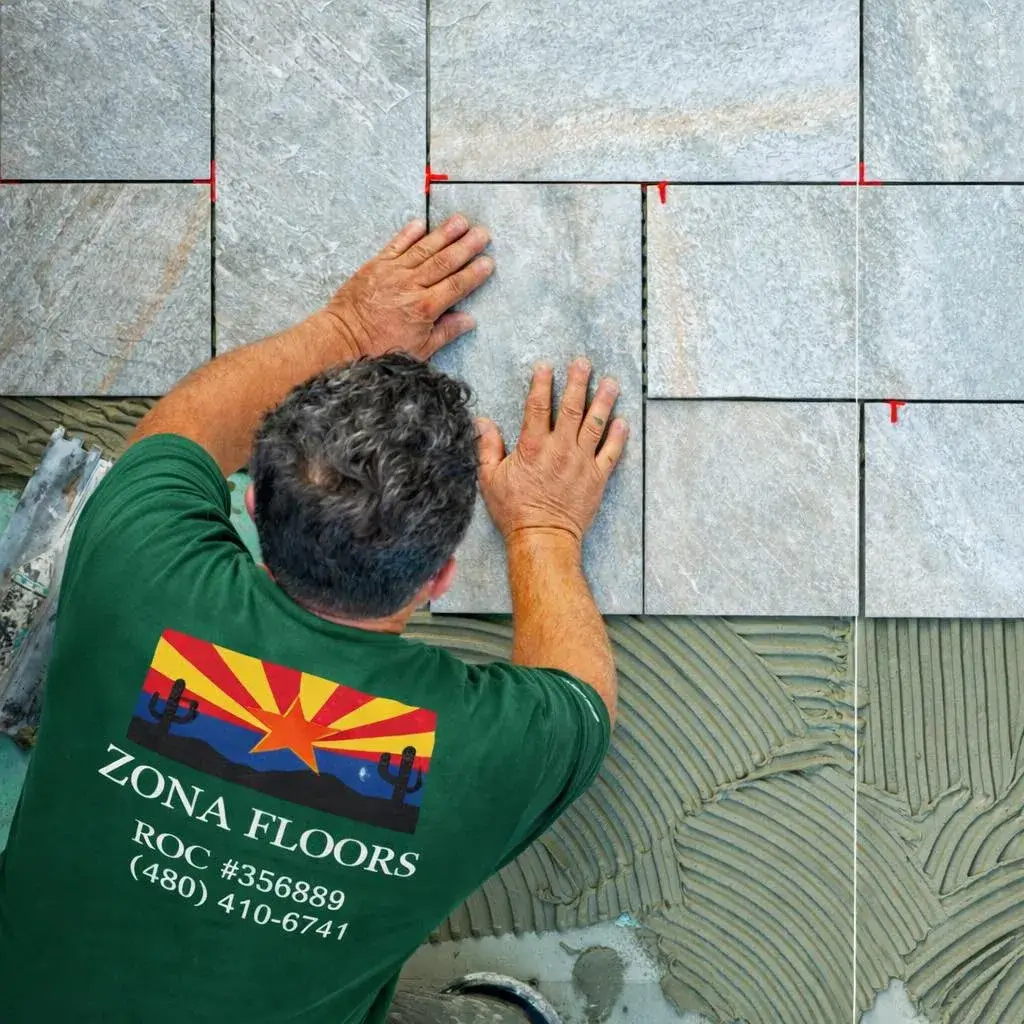
The installation challenge scales with tile size. Large tiles are heavy, require precise cutting equipment, and demand a flatter substrate than smaller tiles. A 12x12 tile can bridge a 1/4” subfloor variation without visible lippage; a 24x48 tile cannot. Proper substrate preparation is more important — and more demanding — for large-format tile than for any other flooring material. Shortcuts in this step produce lippage (edges that sit higher than adjacent tiles), which is both a tripping hazard and a visual flaw that cannot be fixed without tearing out the floor. Our guide on subfloor leveling and preparation explains what proper prep involves for different tile sizes.
Tile Patterns
Beyond size, the layout pattern of tile has a significant impact on the overall aesthetic of a room.
Grid (stacked) — Tiles aligned in a true grid, grout lines lining up in both directions. Clean and contemporary.
Offset (brick) — Each row is offset by half a tile width from the row below. The most common layout for rectangular tiles, it breaks up the monotony of a grid pattern.
Diagonal — Tiles rotated 45 degrees and set at an angle. Creates visual interest and can make a room feel wider. Requires more cuts and generates more waste, which adds cost.
Herringbone — Rectangular tiles set in a V-pattern. Very popular right now in both traditional and modern applications. More labor-intensive than basic layouts; dry-layout planning is essential before any thinset is applied.
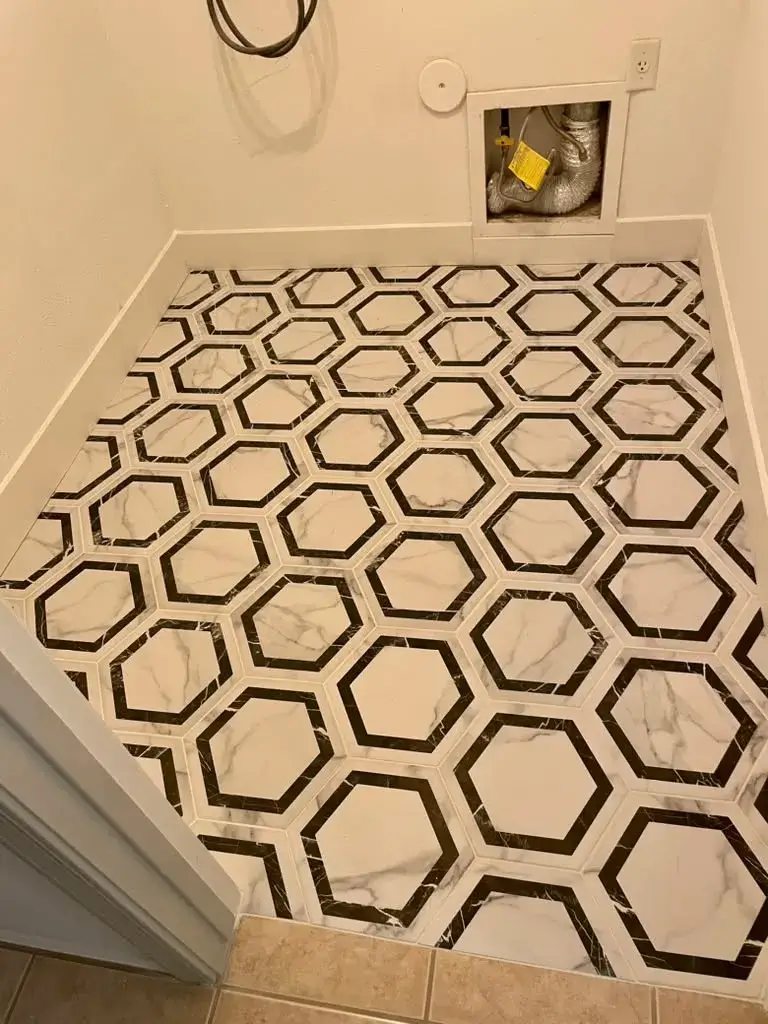
Basketweave and other mosaic patterns — Smaller tiles arranged in interlocking geometric patterns. Common in bathroom floors and accent areas.
Grout: Selection and Maintenance
Grout fills the joints between tiles and prevents moisture from entering the substrate. Getting grout right matters both aesthetically and functionally.
Unsanded grout is used for joints 1/8” or smaller — typically wall tile and small-format floor tile. Sanded grout is used for joints wider than 1/8” — most floor tile applications. Epoxy grout is non-porous, stain-resistant, and used in commercial and high-moisture environments; it is harder to work with but requires no sealing.
Grout color is a major design decision. As a rule of thumb: a close match to the tile color reads as seamless and elegant; a high contrast reads as intentional and graphic. Light grout shows staining over time; darker grout is more forgiving. All standard sanded and unsanded grout should be sealed after installation and re-sealed every 1–3 years depending on traffic and moisture exposure.
The Cold Floor Problem (and the Solution)
The one legitimate complaint about tile flooring is the cold, hard feel underfoot — particularly in winter months or in air-conditioned spaces. In Arizona, the summer benefit (cool underfoot) becomes a winter drawback.
Electric radiant heating is the elegant solution. A thin electric heating mat is installed beneath the tile during installation, embedded in thinset mortar, and controlled by a programmable thermostat. The system heats the tile surface to a comfortable temperature — typically set to activate before you wake up or before you step out of the shower. Radiant heat is efficient, even, and nearly invisible once installed. The cost of the system itself is modest; the installation cost is minimized when done concurrently with a tile installation.
Zona Floors installs porcelain and ceramic tile throughout Tempe, Phoenix, and Maricopa County. We handle everything from standard floor tile to large-format installations, custom patterns, and shower builds. For a detailed look at our tile installation services, visit our tile & stone flooring page. If natural stone interests you — travertine, marble, or slate — explore our natural stone flooring guide.